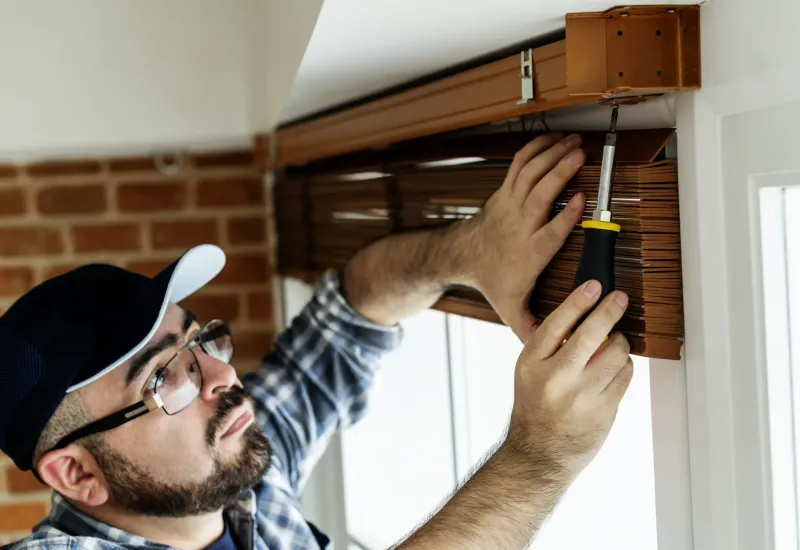
We've been installing window coverings in coastal San Diego homes for 18+ years. In that time, we've seen what happens when a homeowner in Coronado puts real wood blinds on their west-facing windows — or when someone in Pacific Beach installs aluminum mini blinds in their sea-breeze bedroom.
Warped slats. Corroded rails. Fabric that traps moisture and grows mold. All within 3–7 years.
This guide is based on real installations across La Jolla, Del Mar, Coronado, Pacific Beach, Ocean Beach, Point Loma, Solana Beach, Cardiff, Encinitas, and Carlsbad. Use it to choose window coverings that will still look great 15 years from now.
Why the Coast is Different
San Diego's coastal microclimate creates three specific threats to window coverings:
- Salt air: Salt particles from ocean spray land on window surfaces, rails, and mechanisms. Salt is hygroscopic — it attracts and holds moisture — accelerating corrosion on metal parts and oxidation on aluminum slats.
- Marine layer condensation (June Gloom): Cold morning air condenses on warm glass and surrounding surfaces. In June–August, San Diego coastal windows get a daily moisture treatment. Real wood absorbs this repeatedly and eventually warps.
- UV intensity: Coastal windows often face west with open sky views. Direct afternoon sun bleaches and degrades fabrics and natural materials faster than inland locations.
The Coastal Humidity Rating System
We rate each product on three dimensions specific to San Diego coastal conditions: humidity resistance, salt air resistance, and UV durability.